The complete UK railway network, on one interactive map
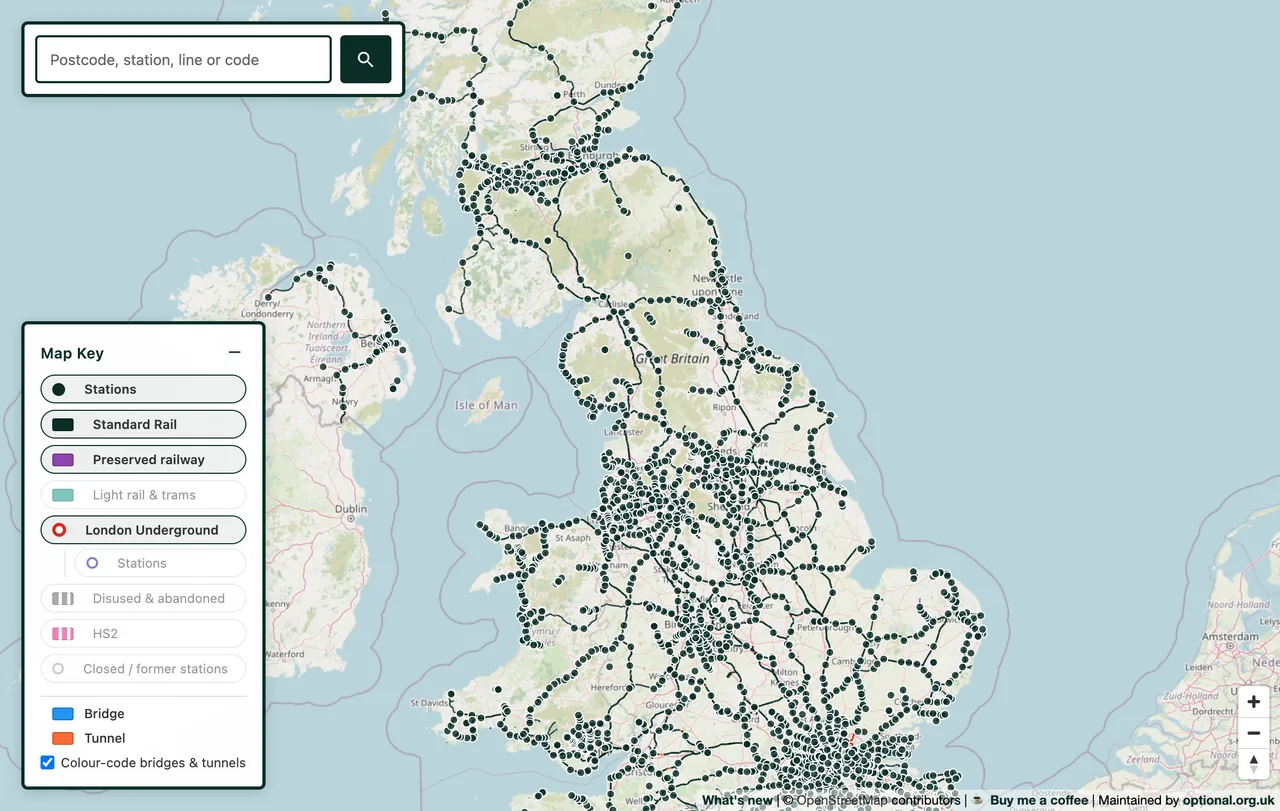
Every line and station in Great Britain and Northern Ireland. Search by postcode, station name, station code or line, and find your nearest stations in seconds. Free, fast and works on your phone.
What you can do
A simple search box and a tap-anywhere map. No account, no clutter.
Search any way you like
Enter a postcode, a station name, a station code (CRS, e.g. PAD or YRK), or a line name like the West Coast Main Line, and the map flies straight to it.
Find your nearest stations
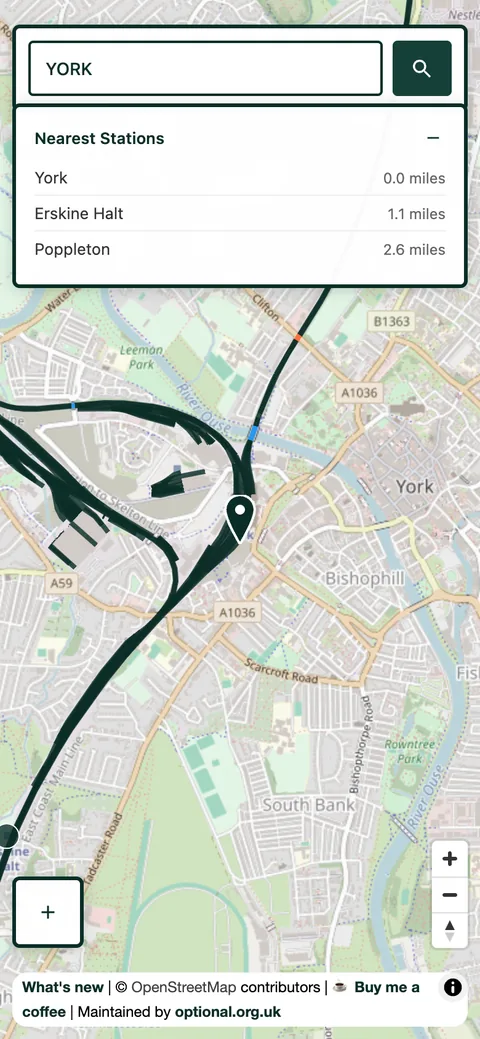
Drop a postcode or location and instantly see the three closest stations, with the distance to each.
Tap any station or line
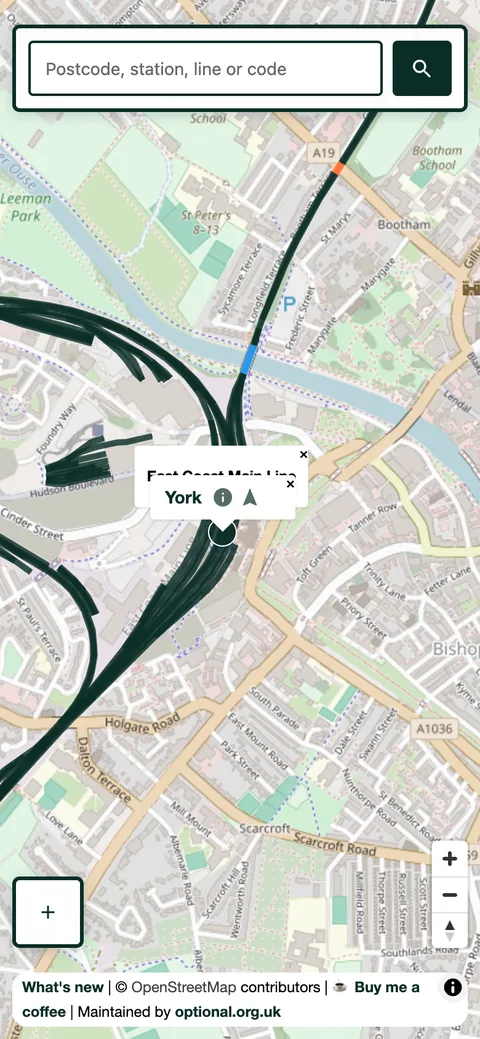
Open a station for a link to its Wikipedia article and its location on Google Maps, or tap a line to see which route it is.
See it in action
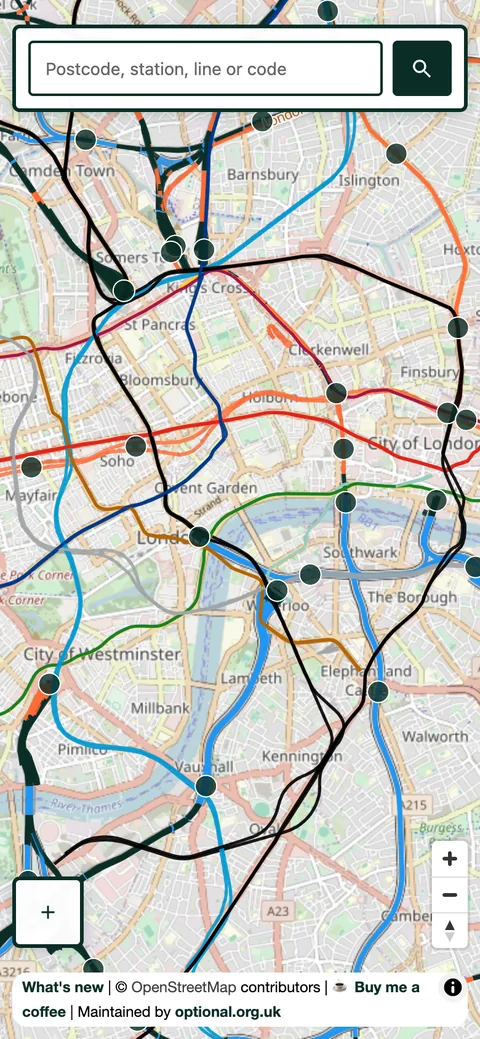
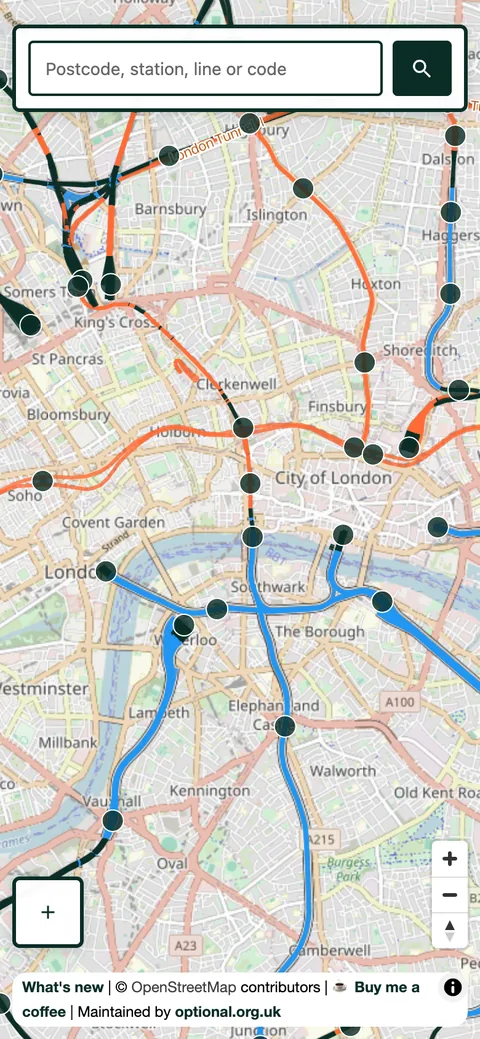
A quick look on a phone: search, tap a station, and switch on the layers you want.
What's on the map
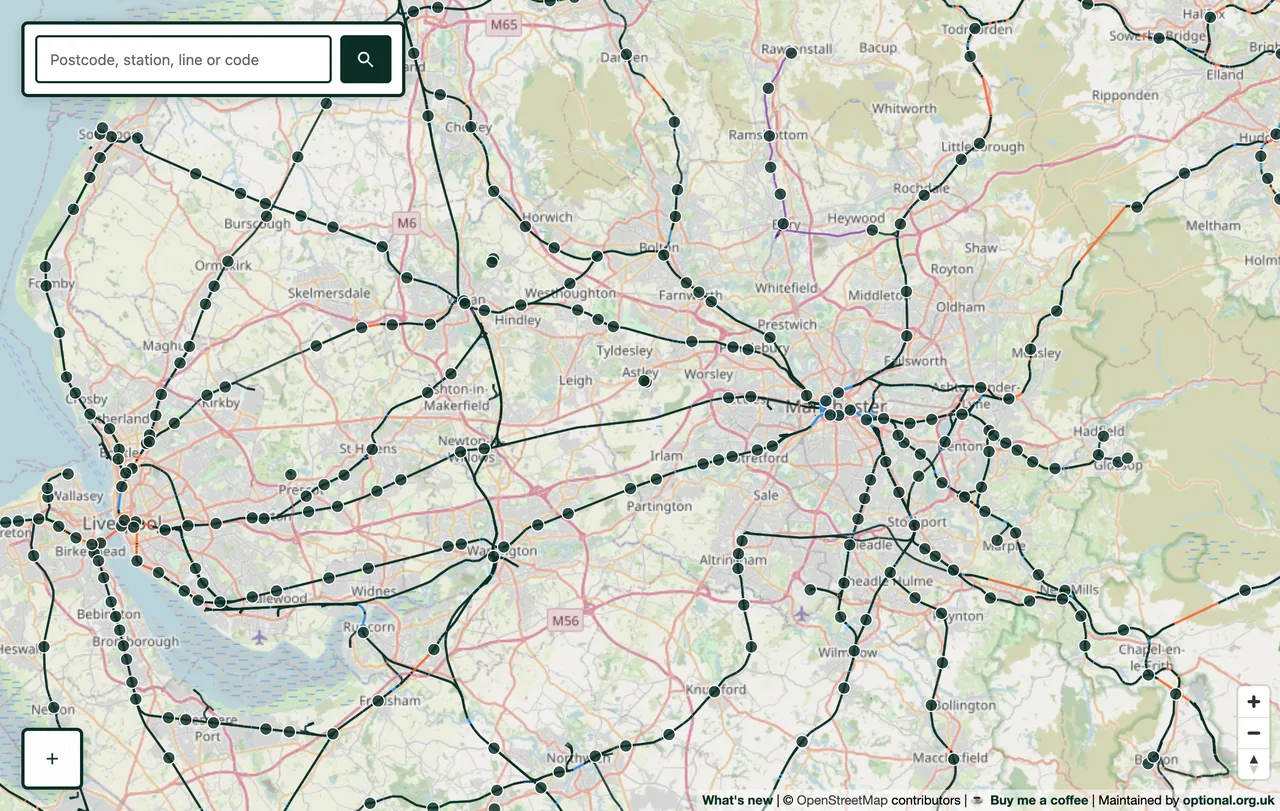
The whole network is drawn from open data, not invented. Switch layers on and off in the key.
Heavy rail
The full National Rail network, with bridges and tunnels colour-coded and principal tunnels and viaducts named.
Heritage railways
Preserved and heritage lines, from the Swanage Railway to narrow-gauge lines, shown in their own colour and searchable.
London Underground
The Tube in its official line colours, with every Underground station, as an optional layer of its own.
Light rail & trams
Metros, trams and light rail across the country, plus the Glasgow Subway.
HS2
The route of the new high-speed railway and its stations, with sections under construction and cancelled ones shown distinctly.
Disused & former
Disused and abandoned lines, plus thousands of closed and former stations that no longer exist.
Explore by theme
Guides to the corners of the network enthusiasts love most. Each opens the map with that layer ready.
Disused & abandoned lines
Britain's lost railways: the Beeching cuts and earlier closures, mapped.
Closed & former stations
Thousands of stations that no longer exist, each linked to its Wikipedia article.
Heritage & preserved railways
Steam and narrow-gauge lines, shown in their own colour.
Geographic Tube map
The London Underground in real geography, in the official line colours.
By the numbers
The network, counted up from the open data behind the map. See the full breakdown →
How it was built
A small, fast, framework-free web app built on OpenStreetMap and Wikidata, refined with feedback from railway enthusiasts. Read the build log for the technical story and the decisions behind it.
Read how it was built →